Winch Out & Vehicle Recovery
A wheel dropped off the edge of a gravel shoulder, a car sunk into soft ground at a job site, a van that lost traction on the climb up Burnaby Mountain. If the vehicle is undamaged and simply stuck, a controlled pull gets it back on solid ground without the cost of a full tow.
From $120, depending on how far in it is and how long the pull takes.
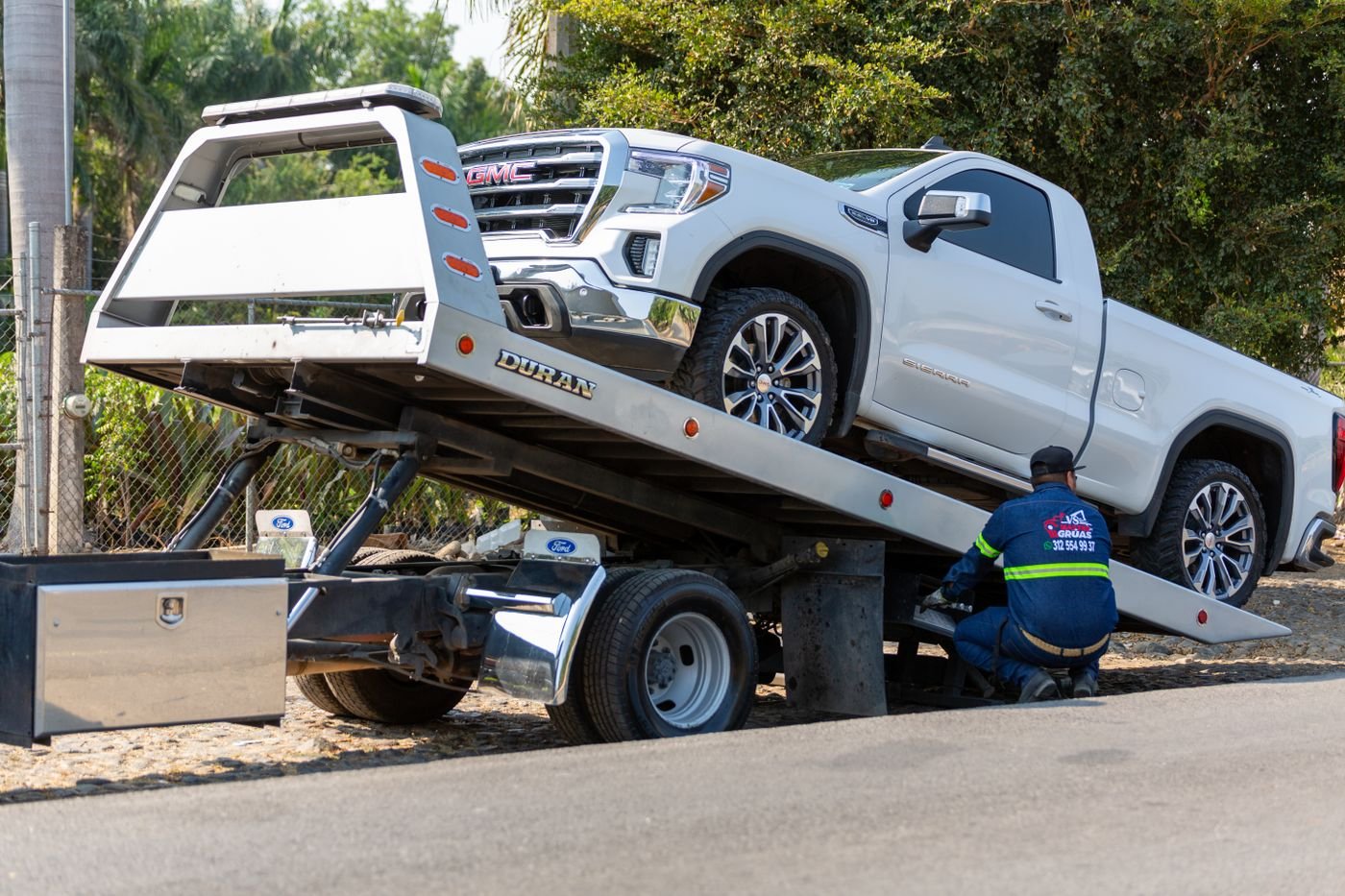
What counts as a winch out
A recovery is not a tow. In a recovery the vehicle is mechanically fine and the only problem is that the tires cannot find grip, or one corner has dropped somewhere it should not be. The job is to move it a few metres back onto pavement, after which you drive away. A tow is for a vehicle that cannot be driven at all. The two are priced very differently, so it is worth describing the situation accurately on the phone.
Typical recoveries we are called to:
- A rear wheel off the lip of a gravel shoulder on a rural stretch
- Soft mud or fill at a construction site, usually a work van
- Snow and ice on the Gaglardi Way climb or on the steeper residential streets in North Burnaby and the North Shore
- A car nosed into a ditch or a grass verge after an avoidance manoeuvre
- Sand and loose ground near the river flats and industrial yards
How the pull is done
The part that matters is the attachment point. Most cars carry a screw in eye in the spare wheel well that threads into a socket behind a pop out panel in the bumper. Worth knowing what that eye is actually for: manufacturers rate it for towing a car along a flat surface, and plenty of owner manuals say in so many words not to use it for recovery. So it gets used only for a light straight pull on level ground, and anything with real load behind it goes onto a structural point on the subframe instead. What never gets used is a suspension arm, a tie rod, an axle, a bumper bar or a tow ball. Each one either bends or lets go, and a strap released under tension travels fast enough to kill someone.
Load is applied progressively rather than by snatching. A steady pull along the direction the vehicle wants to travel does the job in almost every case, and it keeps the forces well inside what the recovery point is rated to. We keep bystanders well clear of the line and off to the side, never standing in line with it.
When a recovery turns into a tow
Sometimes the honest answer changes once we see it. If the vehicle came to rest hard enough to damage a wheel, bend a control arm or crack the oil pan, pulling it out just moves a broken car to a different spot. We will tell you that on site and switch to arranging transport instead. Same if the vehicle has gone down a steep bank or is resting on its side. That is specialist heavy recovery, and the right people for it have the equipment and the insurance we do not.
For the same reason, we do not recover transport trucks, buses, RVs or anything near that weight class. The van and its gear are rated for cars, vans and light pickups, and working outside that rating is how people get hurt.
Winter on the hills
Metro Vancouver gets just enough snow each year to catch everyone out. Most of the city stays clear while the higher ground does not, and the result is predictable. The climb to SFU, the streets above Hastings in North Burnaby, the Heights, and much of the North Shore above the highway all become difficult on the handful of days a year it actually settles. Cars on all season tires get partway up, lose traction and end up sideways across the road.
If that is you, the single most useful thing you can do before calling is not to keep spinning the wheels. Spinning polishes the snow underneath into ice and digs the tire into a hole, which turns a thirty second pull into a much longer job. Stop, straighten the wheels, and wait.
What helps us help you faster
A rough description of the ground is worth more than an exact location. Mud behaves differently from gravel, and both behave differently from snow. How far off the pavement the vehicle sits, counted in car lengths, tells us how much line we need. Whether it is level or nose down decides which direction the pull goes. And if there is nowhere solid for a second vehicle to stand, that is the thing we most need to know before setting off, because it is the one problem we cannot solve on arrival.
Do not let bystanders help with a strap. Well meaning drivers offering to pull you out with a tow ball and a ratchet strap cause a disproportionate share of serious injuries. Tow balls shear off and fly, and ratchet straps are rated for holding load, not for recovery shock.
Worth knowing first
How is this priced?
From $120, and it depends on how far off the road the vehicle is and how long the pull takes. We give you the number on the phone once you describe the situation, and if it turns out to be worse than described on arrival we tell you before anything is attached.
Could the recovery damage my car?
Not when the load goes through a proper recovery point. Damage happens when somebody hooks a strap to suspension or a bumper. If your vehicle has no usable recovery point, we will say so rather than improvising.
I am stuck in snow on a hill. Can you reach me?
Usually, but conditions decide it. If the road is impassable for the service van too, sending it does nobody any good. We will be straight with you about that instead of taking the booking and failing to arrive.
Do you handle trucks or RVs?
No. Cars, vans and light pickups only. Anything heavier needs a specialist heavy recovery operator and we will point you toward one.
My car slid into a ditch and now it will not start.
Then it is a tow rather than a recovery. Pulling out a vehicle that cannot drive away just relocates the problem, so we would arrange transport to a shop instead.
Stuck and spinning?
Stop spinning the wheels, then call and describe the ground and how far off the road you are.