Emergency Fuel Delivery
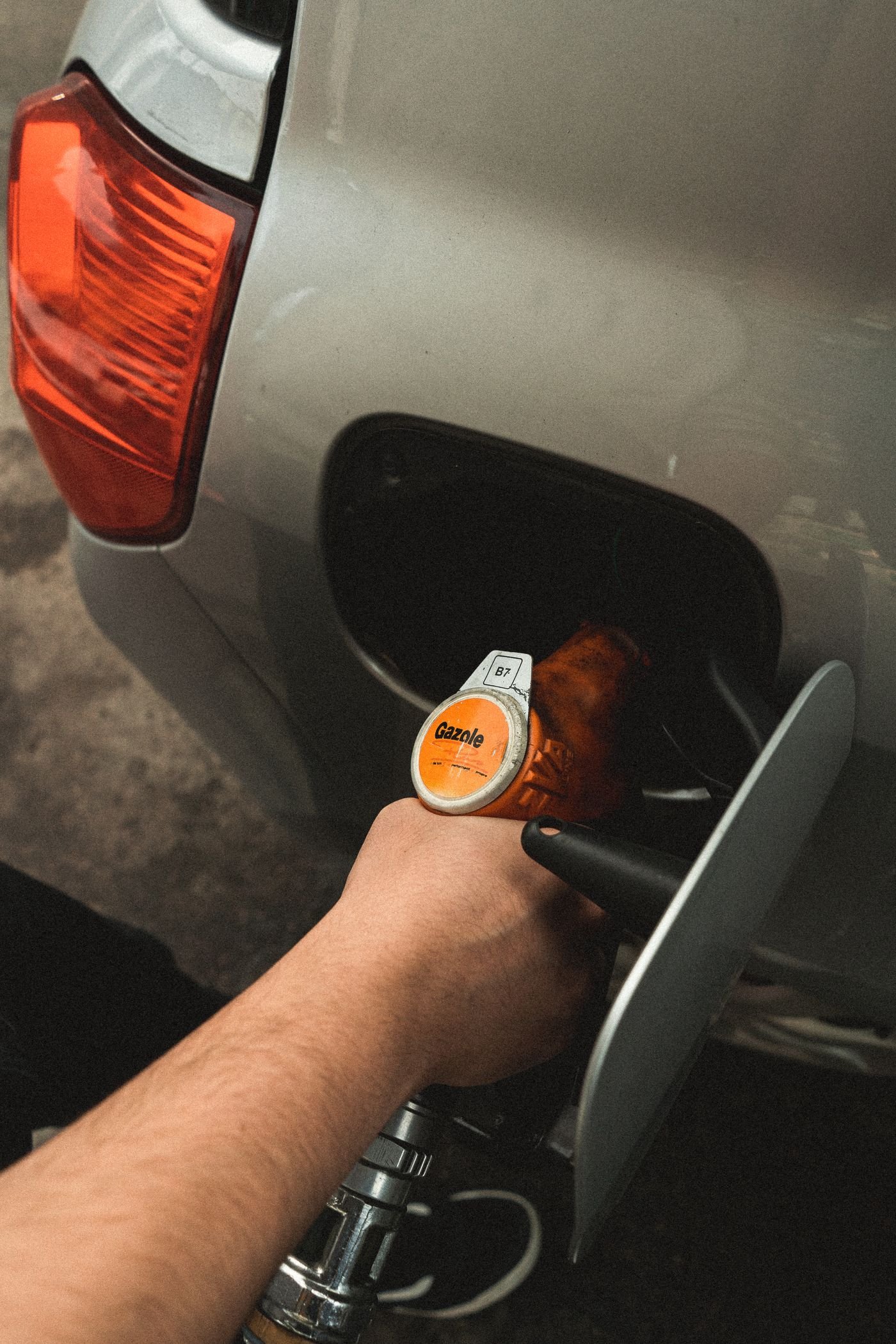
The gauge sat on empty for one block too many. We bring enough gas or diesel to get you off the road and to the nearest station, poured into the tank at your location so you are not walking down a highway shoulder with a borrowed jerry can.
$70 plus the fuel. The fuel itself is charged at what it cost at the pump, and you see the receipt.
How much we bring
Ten to twenty litres, depending on where you are and where the nearest open station is. The point is not to fill the tank. Carrying large volumes of fuel in a service van is neither safe nor legal, and you do not need it. Twenty litres puts somewhere around 200 kilometres in most cars, which is many times further than you need to go to reach a pump.
Tell us on the call whether the vehicle takes gasoline or diesel, and we will confirm it again when we arrive by checking the filler flap. Getting that wrong is an expensive mistake and it is worth the extra ten seconds.
What running dry actually does to a car
With a petrol engine, usually nothing lasting. The engine stumbles, loses power and stops. You add fuel, crank it for a few seconds longer than normal while the pump refills the line, and it runs again. The one thing worth knowing is that the fuel in the tank also cools the electric fuel pump that sits inside it. Running the tank to empty repeatedly shortens that pump’s life, which is why the habit of driving on fumes eventually costs real money.
Diesel is less forgiving. A diesel fuel system has to be free of air, and when the tank empties, air gets drawn into the lines and the injectors. Adding fuel is often not enough on its own. Some modern diesels will self prime if you cycle the ignition several times and let the electric lift pump run. Others need the system bled manually at the filter housing, and a few need a scan tool. If you drive a diesel, say so when you call so we arrive expecting it, and understand that it may still end up needing a shop.
Electric vehicles
We cannot deliver electricity. There is no practical roadside charge for an EV that has run to zero, and portable generators are far too slow to be useful. The answer for a flat EV is a flat deck tow to a charger, and that is what we would help you arrange. If your electric car has simply gone dead and refuses to wake up, though, the culprit is often the small twelve volt battery rather than the main pack, and that we can boost.
Where people run out around here
Bridges and the approaches to them, every time. The Ironworkers Memorial, the Port Mann and the Alex Fraser all run long stretches with no services at either end, so a car that was already low when it joined the queue arrives at the far side empty. The Highway 1 corridor through Burnaby is the same story. There are fewer stations directly off those exits than people assume, and the ones that exist are not all open overnight.
The other pattern is simple miscalculation at the end of a shift. Somebody plans to fill up on the way home, gets stuck in traffic on Lougheed or Marine Way, and the low fuel light that had thirty kilometres in it when the trip started does not have thirty kilometres any more. Idling in stopped traffic burns fuel while the odometer stands still, which is exactly the condition the range estimate is worst at predicting.
Staying safe while you wait
If you coasted to a stop on a shoulder, stay belted in with hazards on, or get out on the passenger side and stand behind a barrier. Do not stand between your car and oncoming traffic, and do not try to push the vehicle along a highway. On a quiet residential street none of this matters much, but on Highway 1 or the approach to a bridge it matters a great deal.
If the engine stopped but the gauge still showed fuel, an empty tank is probably not your problem. A failed fuel pump, a blocked filter or an electrical fault stops a car just as abruptly and feels identical from the driver’s seat. Say what the gauge reads when you call. Twenty litres poured into a tank that already had fuel in it changes nothing.
Why not just walk to a station
Plenty of people do, and if you are two blocks from a station on Hastings that is the sensible choice. It stops being sensible in the rain, in the middle of the night, when the walk means crossing a bridge or a highway on foot, or when leaving the car where it sits will earn it a ticket or a tow. Stations also no longer lend out jerry cans, and buying one plus the fuel is not far off what a delivery costs.
Asked on the call
How much fuel do you actually bring?
Ten to twenty litres. That is deliberately enough to reach a station and no more, because carrying large volumes in a service vehicle is not safe.
Do I pay for the fuel separately?
Yes. The call out is $70 plus the fuel, and the fuel is charged at pump price with the receipt handed to you. No markup on the litres.
Can you bring diesel?
Yes, but tell us on the call. Diesels that have run completely dry sometimes need the fuel system bled before they will restart, and that is not always something we can finish at the roadside.
My car still will not start after you add fuel.
On petrol cars, cranking for a few extra seconds usually does it while the pump refills the lines. If it still will not fire, the empty tank was a symptom rather than the cause, and the next step is diagnosis at a shop.
Do you deliver to a parkade or a job site?
Yes to both, and to residential driveways. Anywhere we can safely reach the car.
Can you fill a generator, a boat or equipment on site?
For small equipment on a job site, usually yes. Ask when you call and describe what it is, because fuel type and container rules differ from a car.
Out of fuel on the shoulder?
Stay with the car, hazards on, and tell us the exact stretch of road you are on.