Mobile Auto Detailing, Done at Your Address
A detail is a different job from a wash. This is the one that takes most of a day, pulls contamination out of the paint, puts gloss back with a machine polisher, and gets the interior to the point where the car smells new rather than cleaned.
$230 for a standard car. Larger SUVs and vans are quoted on the size.
What the day looks like
A full detail runs in a fixed order, because every stage has to happen before the next one makes sense. Polishing a dirty car grinds the dirt in. Sealing before polishing locks the defects under a layer of protection. So it goes like this.
1. Wheels, arches and the worst of it first
Wheels come before the body, always, because wheel cleaner and brake dust are the dirtiest part of the car and you do not want that splashing onto paint you have already finished. Arches get pressure rinsed, wheel faces and barrels cleaned with dedicated brushes, and tires scrubbed rather than just sprayed with shine.
2. Wash and chemical decontamination
Snow foam, then the two bucket contact wash. Then two things a normal wash never includes. An iron fallout remover goes on the paint and reacts with embedded brake dust too fine to see, turning visibly purple as it works. Then a tar solvent lifts the black speckling along the lower doors and behind the wheels. If the car has spent a winter on Highway 1 or crossing the Second Narrows twice a day, that speckling is the single biggest difference between a washed car and a decontaminated one.
3. Clay bar
Run a hand over the paint after washing and it will feel slightly gritty. Those are bonded contaminants that chemicals do not reach: industrial fallout, overspray, rail dust, tree sap residue. A clay bar with lubricant shears them off and leaves the surface properly smooth. This is the step that makes the difference people notice when they run their fingers over the roof afterwards.
4. Machine polish
A dual action polisher with a cutting or finishing pad, depending on what the paint needs. A single stage polish removes the lighter swirl marks and the haze that makes a dark car look grey, and brings back reflection and depth. It will not remove deep scratches you can catch a fingernail in, because those go through the clear coat, and we will tell you which of your marks fall into which category before starting.
5. Protection
A paint sealant goes on last. A synthetic sealant gives roughly four to six months, which lines up neatly with the two things a car here needs protecting from: the salt and road film from October to March, and the sap and pollen that arrive the moment it stops raining. Water beads instead of sheeting and the next wash takes half the effort. Ceramic coatings last years but want a controlled indoor space to apply properly, so that is a different conversation and a different price.
6. Interior
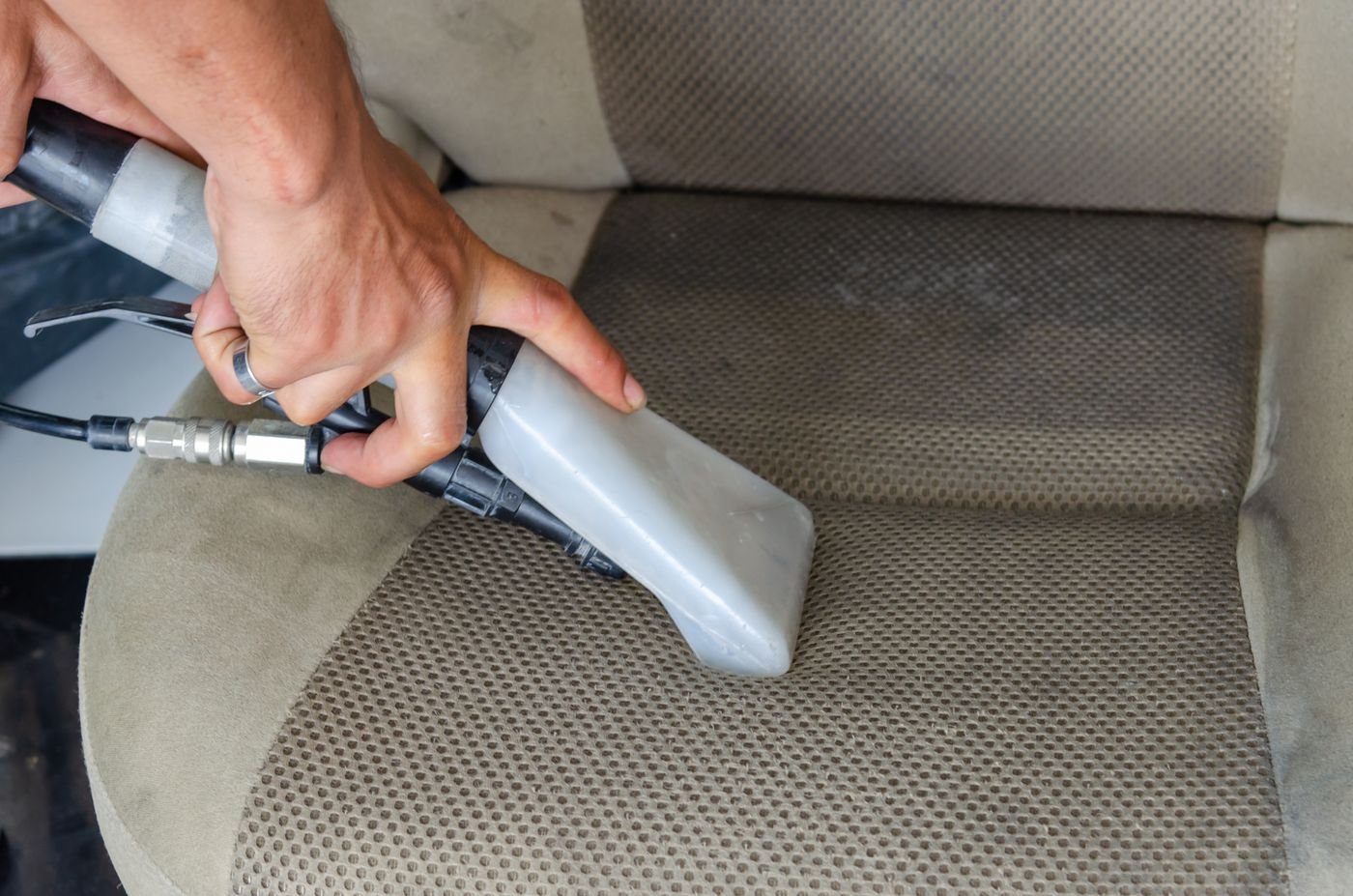
Everything comes out. Mats, boot floor, seats moved fully forward and fully back. Full vacuum including under the seats and in the rails where the grit collects. Fabric seats and carpets get hot water extraction, which injects cleaning solution and pulls it straight back out with the dirt, rather than simply shampooing water into the foam. Leather is cleaned with a pH balanced cleaner and then conditioned, because the usual failure on leather around here is drying and cracking on the driver’s bolster. Vents, switchgear and seams are done with steam and detailing brushes. Glass is finished last so nothing lands on it afterwards.
Smells, and what actually removes them
Odour sits in the fabric, the foam under it, and the cabin air filter. Spraying a fragrance over it buys two days. Extraction removes the source from the upholstery, and replacing a clogged cabin filter deals with the part most people never think about. Damp smells, which are extremely common here given the rain, are usually a wet carpet from a leaking door seal or a blocked sunroof drain, and no amount of cleaning fixes that until the leak is fixed. If we find standing water under the carpet we will tell you, because that is a repair, not a detail.
Smoke is the hardest. It is in every soft surface and in the ventilation system. A deep clean improves it a great deal but rarely eliminates it entirely on a car that has been smoked in for years, and we would rather set that expectation before you pay.
Who books these
Mostly people at one end or the other of owning a car. Sellers, where a detail reliably returns more than it costs because a buyer judges the interior in about ten seconds. Buyers who have just picked up something used and want the previous owner’s life out of it before they drive it anywhere. And in between, owners who simply keep a nice car and have it done in spring once the winter grime season ends, sometimes again in autumn before it starts.
Lease returns are worth a mention. Lease end inspections charge for interior condition, and the charges are often more than the detail would have cost.
What we need from you
Space and time, and time is the harder one. Four to six hours for a normal car and longer for a large SUV, with the vehicle staying exactly where it is for all of it. Shade matters as well: polishing in hot sun makes the product flash off before it has done anything, so a carport, a shaded driveway or a parkade stall beats an open lot in July. Rain we can work around for the interior but not for the paint stage, so a bad forecast may move the booking.
Clear your personal items out first. Child seats, gym bags, paperwork in the door pockets, change in the console. We will work around them if we have to, but an empty car gets a noticeably better result and it means nothing of yours gets moved somewhere you did not expect.
What people want to know
How long does a full detail take?
Four to six hours for a standard car, and longer for a large SUV or a van. It is a half day commitment, which is why these are booked in advance rather than same day.
Will polishing remove all my scratches?
It removes swirl marks and light marring, which is most of what makes paint look tired. Anything deep enough to catch a fingernail has gone through the clear coat and polishing cannot bring that back. We walk around the car with you first and say which is which.
Sealant or ceramic coating?
For a car that lives outside through a Vancouver winter, a sealant reapplied twice a year is the sensible choice and it is included here. Ceramic lasts years but needs a controlled indoor environment to apply properly, so it is not something to do well on a driveway.
Can you get a coffee spill out of the carpet?
Usually, yes. Hot water extraction handles most organic spills. Older stains that have been through heat cycles can leave a shadow, and dye transfer from something coloured is sometimes permanent.
Do you do headlight restoration?
Yes, as an add on. Cloudy yellowed headlights are oxidised plastic, and sanding and polishing them back is a genuine safety improvement as well as a cosmetic one.
Is it worth detailing before selling?
It is the highest return per dollar of anything you can do to a used car. Buyers judge the interior within about ten seconds of opening the door, and a car that smells clean and has crisp glass reads as looked after.
Book a full detail
Tell us the vehicle, where it will be parked and roughly what is bothering you about it. We will confirm the time and the price.